The 2nd "Yike Chuang" Digital Humanities & Arts Research Seminar and the 2025 International Conference on Computer Technology, Digital Media, and Communication Successfully Held in Chengdu
On November 1, 2025, the 2nd "Yike Chuang" Digital Humanities & Arts Research Seminar and the 2025 International Conference on Computer Technology, Digital Media, and Communication were successfully held at the East Campus of Tianfu College of Southwestern University of Finance and Economics (SWUFE) in Chengdu. The conference was jointly organized by Tianfu College of SWUFE, Deyang Digital Humanities and Arts Research Center, and Chengdu Normal University, hosted by the School of Art and Media of Tianfu College of SWUFE, and co-organized by the Deyang Federation of Social Science Associations, Sichuan Normal University, and more than ten other universities and institutions, with guidance from the Chengdu Public Art Association. The conference brought together experts and scholars in the field of digital humanities and arts from both domestic and international backgrounds to discuss the integrated development of digital technology and the humanities and arts.
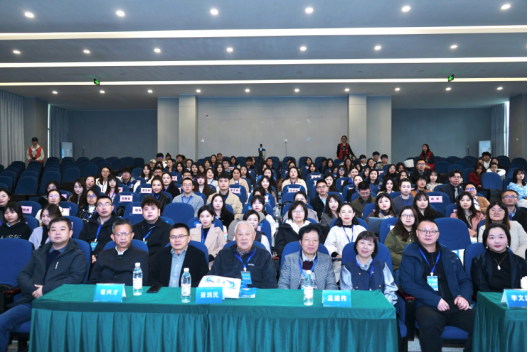
Group photo of conference participants
Keynote Speech Session
During the keynote speech session, five experts and scholars shared cutting-edge research findings from various perspectives. Professor Meng Jianwei, a second-level professor at the University of Chinese Academy of Sciences, delivered a speech titled Scientific Culture, analyzing the contemporary significance of digital humanities from a philosophical perspective and emphasizing that the integration of scientific culture and humanistic spirit is a defining feature of the digital age. Professor Guo Jingming, Director of the Center for Advanced Intelligent Imaging and Visual Technology at National Taiwan University of Science and Technology, presented the latest advancements in intelligent image processing technology via video link, particularly their innovative applications in the digital preservation of cultural heritage. Professor Wang Xiaofei from Chengdu University presented The Digital Rebirth of Cultural Heritage, showcasing breakthroughs in 3D reconstruction technology and illustrating how digital tools bring new vitality to cultural relics through case studies. Ma Liansong, Vice President of the Deyang Local History Society and a second-level researcher, discussed how Deyang's rich historical and cultural resources can be better preserved and disseminated through digital means, drawing from local Party history research. Professor Li Wenbo, Dean of the School of Art and Media at Tianfu College of SWUFE, delivered a speech on Tianfu Studies, systematically elaborating on new paradigms and methods for humanities and arts research in the digital age.

Professor Meng Jianwei, second-level professor at the University of Chinese Academy of Sciences, delivering a keynote speech
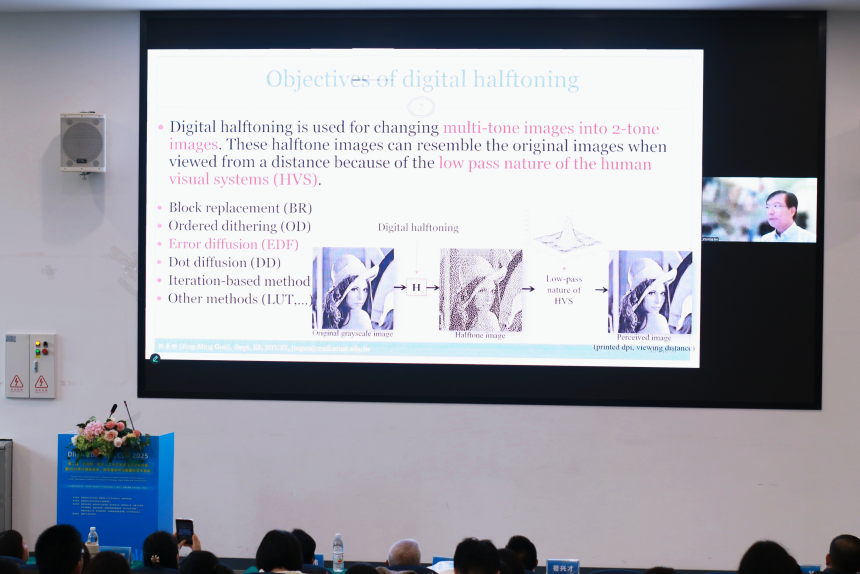
Professor Guo Jingming, Director of the Center for Advanced Intelligent Imaging and Visual Technology, National Taiwan University of Science and Technology, delivering a remote keynote speech
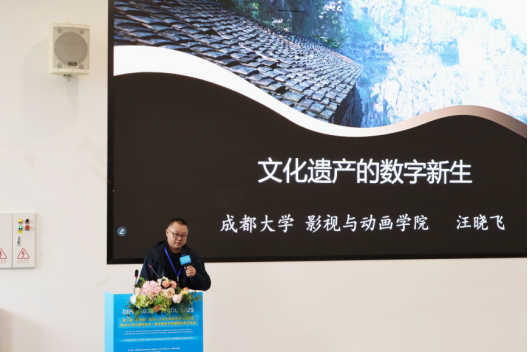
Professor Wang Xiaofei from Chengdu University delivering a keynote speech

Ma Liansong, Vice President of the Deyang Local History Society and second-level researcher, delivering a keynote speech

Professor Li Wenbo, Dean of the School of Art and Media at Tianfu College of SWUFE, delivering a keynote speech
Paper Awards
The conference received numerous submissions from domestic universities, research institutions, and scholars, covering cutting-edge directions such as digital humanities theory, art-technology integration, intelligent communication technology, and media innovation applications, fully reflecting the academic vitality and practical exploration spirit in this field. After a rigorous process including preliminary qualification reviews, expert anonymous reviews, and final evaluations by the center committee, 40 award-winning papers were selected, including 4 first-prize, 6 second-prize, 12 third-prize, and 18 excellence award papers.

Group photo of Excellence Award winners

Group photo of Third Prize winners
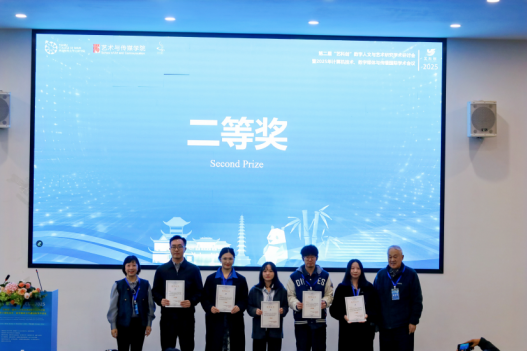
Group photo of Second Prize winners
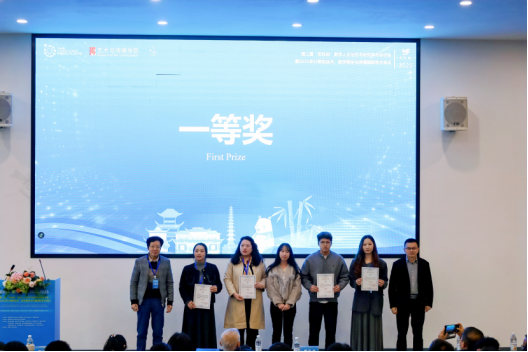
Group photo of First Prize winners
Parallel Sub-forums
In the afternoon, three parallel sub-forums were held for in-depth discussions on different themes. Sub-forum 1 focused on the Contemporary Value of Digital Humanities and Arts, exploring how technologies such as AI-generated content and metaverse art forms are reshaping humanistic expression. Sub-forum 2 centered on Innovative Practices of Deyang's Local Culture in the Digital Intelligence Era, presenting case studies of digital preservation of local culture, including the 3D modeling of Fan's Courtyard. Sub-forum 3 was themed Design Exploration and Practice in Interdisciplinary Contexts, sharing innovative achievements in interactive narrative, digital media design, and related fields. Each sub-forum had a strong academic atmosphere, with young scholars actively asking questions and lively on-site interactions, reflecting the conference's emphasis on and encouragement of emerging academic talent.
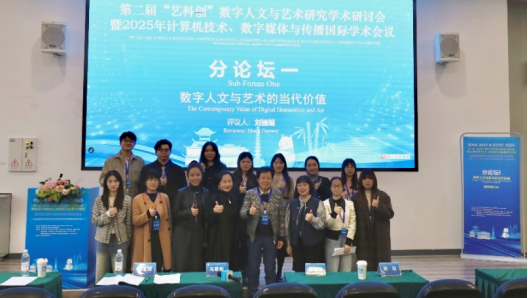

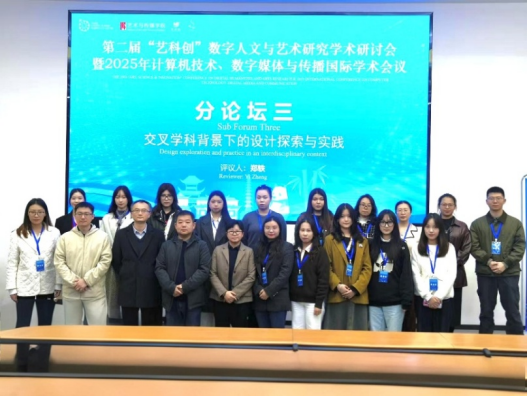
Group photos from the parallel sub-forums
Conclusion
The 2nd "Yike Chuang" Digital Humanities & Arts Research Seminar and the 2025 International Conference on Computer Technology, Digital Media, and Communication concluded successfully. This academic event, jointly organized primarily by Tianfu College of SWUFE and other institutions, with support from multiple partners, not only provided a high-quality exchange platform for researchers in digital humanities and arts but also injected new momentum into the integrated development of digital technology and the humanities and arts through substantive discussions and fruitful outcomes.
The value of this conference lies not only in reviewing the latest trends in the digital humanities field but also in building interdisciplinary and cross-regional collaborative bridges. It enabled university researchers, local cultural practitioners, and technology developers to engage in meaningful dialogue, advancing industry-university-research collaborative innovation from concept to concrete exploration. It empowered international perspectives and local practices to mutually reinforce each other, providing replicable experiences for cultural heritage preservation, digital art creation, and intelligent communication development. As experts at the conference agreed, digital technology is reshaping the cultural ecosystem, and the interdisciplinary strength gathered at this conference is key to navigating this transformation.
The closing is not an end but a starting point for new explorations. In the future, the AEIC Academic Exchange Center will continue to play its role in connecting academia, practice, and industry. With the support of host institutions such as Tianfu College of SWUFE, it will further deepen international cooperation, expand seminar dimensions, and incubate innovative outcomes, providing more researchers with opportunities for exchange and growth, contributing to the flourishing development of humanities and arts in the digital age, and helping to build a more dynamic cultural innovation ecosystem.